
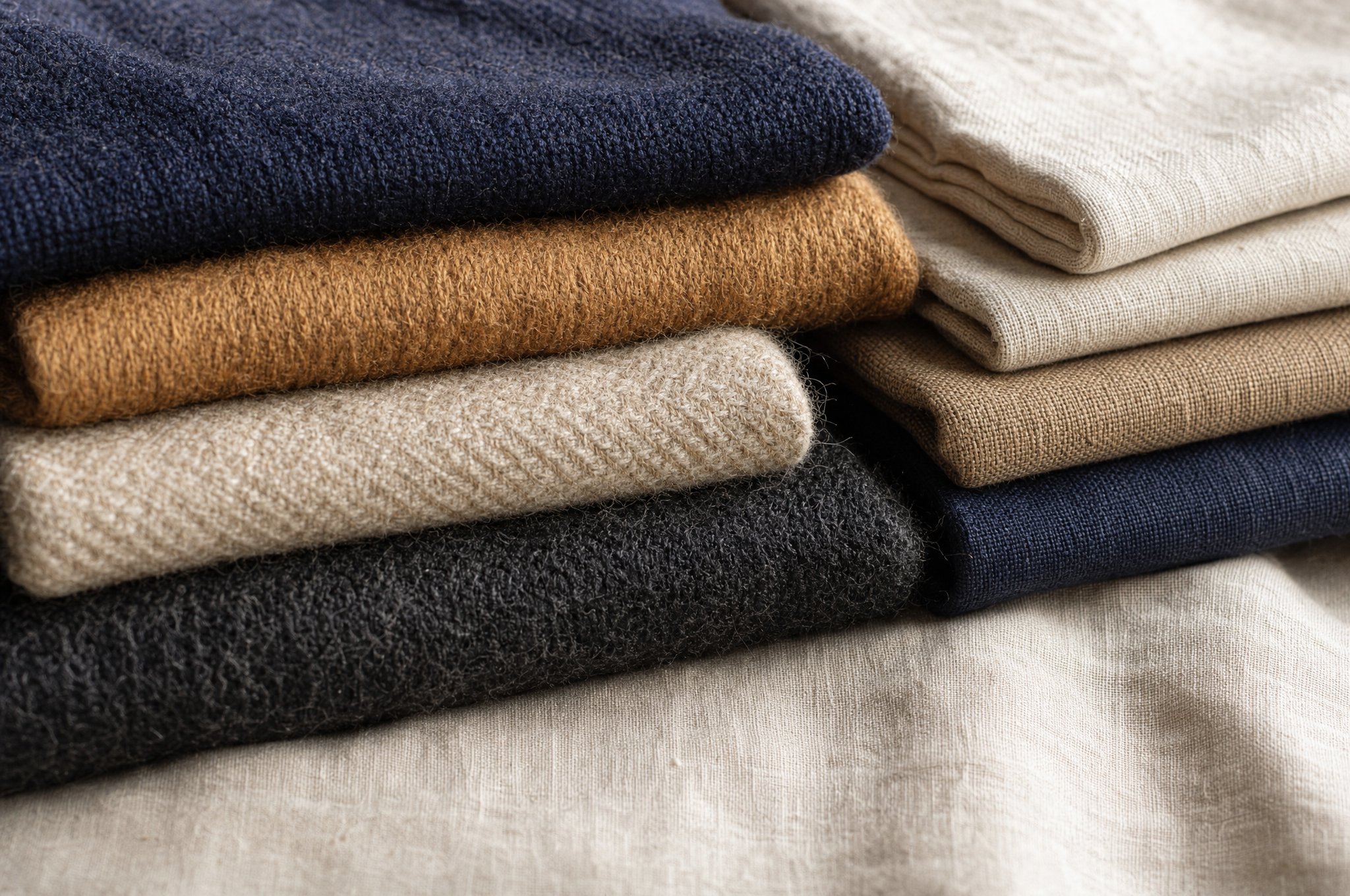
A good sweater is one of the most rewarding garments you can own — and one of the easiest to ruin. Wool, cashmere, and cotton knits are delicate in ways that woven fabrics aren't. They pill. They stretch. They shrink. They attract moths. And the care habits that work for shirts and trousers — hot washes, machine drying, hanging on a peg — will destroy a sweater in a single season.
The good news: knitwear care is not complicated. It's just different from what you're used to, and most of it comes down to three things: washing less, drying flat, and storing folded. Master those, and your sweaters will last years instead of months.
The First Rule: Wash Less
Wool and cashmere have a property that most fabrics don't: they're naturally self-cleaning. The fibre's scales lift dirt and odour, and the lanolin (the natural wax in wool) repels stains. A wool sweater worn over a shirt can go weeks between washes without holding odour the way cotton does.
The mistake most people make is treating knitwear like cotton — washing it after every wear. Each wash degrades the fibre, strips the natural oils, and accelerates pilling (the small balls of fibre that form on high-friction areas). A sweater washed every two wears will pill and thin out within a season. The same sweater washed every ten wears can last five years.
After wearing a sweater, don't fold it immediately. Hang it over a chair or a drying rack overnight to let it air out and recover its shape. Wool fibres relax and release odour when given air. Most times, this is all the "cleaning" a sweater needs between washes.
Wash only when the sweater is genuinely soiled: visible dirt, food stains, body odour that doesn't air out, or after extended heavy wear (a full winter season, for instance). For most people, that means washing wool sweaters 2–4 times per season, and cashmere 1–2 times. Less is more.
How to Wash: Hand or Machine, Always Cold
When it is time to wash, you have two options: hand wash or machine wash on a wool cycle. Both work, but the technique matters.
Hand washing (preferred for cashmere and fine wool)
Fill a basin or sink with cool water (never warm — heat shrinks wool). Add a small amount of wool-safe detergent — a pH-neutral, enzyme-free formula designed for wool and delicates. Regular laundry detergent contains enzymes that break down protein fibres (wool and cashmere are proteins), so it will damage the sweater over time. Submerge the sweater and gently squeeze the water through the fabric. Don't agitate, wring, or scrub — friction causes felting, which is how wool shrinks permanently. Let it soak for 10–15 minutes, then rinse in clean, cool water until no detergent remains.
Machine washing (for sturdy wool and cotton knits)
If the care label allows machine washing, use the wool or delicates cycle, cold water only, and the same wool-safe detergent. Put the sweater in a mesh laundry bag to reduce friction. Never use a regular cycle — the agitation is too aggressive and will felt the wool.
Never use hot water. Never use regular detergent. Never use fabric softener (it coats the fibres and reduces wool's natural properties). These three mistakes account for nearly all ruined knitwear.
How to Dry: Always Flat, Never Hang
Drying is where most sweaters die. A wet wool sweater is heavy, and its fibres are relaxed and pliable. If you hang it, gravity will pull the wet fabric downward, stretching the sweater out of shape permanently — the shoulders will dimple from the hanger, the body will lengthen, and the sleeves will droop past your hands. This damage is irreversible.
Always dry knitwear flat. After washing, gently squeeze out excess water (never wring — twisting damages the fibres). Lay the sweater on a clean, dry towel, roll the towel up with the sweater inside, and press gently to absorb moisture. Then unroll, reshape the sweater to its correct dimensions (pat it into shape, making sure the shoulders, sleeves, and body are aligned), and lay it flat on a dry towel or a mesh drying rack.
Turn it over after a few hours to dry both sides evenly. Drying takes 24–48 hours depending on the thickness of the knit and the humidity of the room. Be patient — rushing the process with heat will shrink the wool.
Never, ever put knitwear in the dryer. The heat and tumbling will felt and shrink wool irreversibly in minutes. Even on a "low heat" setting, a dryer is a death sentence for a good sweater.
Dealing With Pilling
Pilling — those small, fuzzy balls that form on high-friction areas (underarms, sides, where a bag strap rubs) — is normal, especially on new knitwear. It's caused by short fibres working their way to the surface and tangling. It's not a sign of poor quality, despite what you may have heard — even the finest cashmere pills initially.
The fix is simple: use a sweater comb or a fabric shaver to remove the pills gently. A sweater comb (a small, fine-toothed comb designed for the purpose) is the safest option — run it lightly over the surface, and it lifts the pills without damaging the intact fibres. Electric fabric shavers work too, but use them on the lowest setting and don't press hard, or you'll cut the fabric itself.
Pilling decreases over time. The first few wears of a new sweater shed the loosest fibres, and after a season of occasional de-pilling, the fabric stabilizes. A well-cared-for cashmere sweater will pill heavily in year one, lightly in year two, and barely at all thereafter.
Storing Knitwear: Fold, Never Hang
The storage rule is the same as the drying rule: never hang knitwear. Even dry, a sweater on a hanger will stretch at the shoulders and lengthen over time. The weight of the fabric, combined with gravity, slowly distorts the shape. Fold all knitwear and store it on a shelf or in a drawer.
For seasonal storage — packing sweaters away for summer — the threats are moths and damp. Moths lay eggs in wool, and the larvae eat the fibres, leaving small holes. To prevent this, store clean sweaters in airtight containers (moths are attracted to body oils and food residue, so wash before storing). Cedar blocks or lavender sachets help deter moths, though they're not foolproof. Check stored sweaters mid-season for any sign of moth activity.
Never store knitwear in plastic dry-cleaning bags — they trap moisture and can cause mildew. Use breathable cotton storage bags or acid-free tissue paper for the finest pieces.
A Quick-Reference Summary
| Task | Do | Don't |
|---|---|---|
| Washing frequency | 2–4 times per season | After every wear |
| Water temperature | Cold only | Warm or hot |
| Detergent | Wool-safe, pH-neutral | Regular, enzyme-based |
| Drying | Flat, reshaped, air-dry | Hang or machine dry |
| Storage | Folded, airtight for seasonal | On hangers |
| De-pilling | Sweater comb, gentle | Pull pills by hand |
Knitwear rewards care. A Merino sweater washed in cold water, dried flat, and stored folded will look as good in five years as the day you bought it. The same sweater, thrown in the wash on hot and hung on a peg, will be a rag by spring. The difference isn't the sweater — it's the habits. Build the right ones, and your knitwear investments will pay dividends for years.