Walk into any menswear store and you'll see them hanging side by side: jackets that look, to the untrained eye, essentially identical. Two or three buttons, lapels, pockets, sleeves with buttons. One is called a sport coat. Another is a blazer. A third is a suit jacket. The price tags are different. The sales associate might tell you they're "basically the same thing." They are not.
The confusion is understandable — the three garments share a common ancestor and a similar silhouette. But they differ in construction, fabric, formality, and intent. Wearing the wrong one for the occasion is a subtle but real misstep, like wearing trainers to a dinner party: nothing is technically broken, but something is off. Here's how to tell them apart and when to wear each.
The Suit Jacket
Let's start with the most specific: the suit jacket. A suit jacket is one half of a suit — it was made to be worn with matching trousers cut from the same fabric. The defining feature is that matching: the jacket and trousers are from the same bolt of cloth, dyed and woven in the same batch, and constructed to be worn together.
Because it's designed as a set, the suit jacket is the most formal of the three. The fabric is typically smoother and finer — a worsted wool in a solid colour or subtle pattern (pinstripe, glen check). The construction is usually more structured, with canvas and shoulder padding that give it a clean, architectural line. The buttons are often horn or a dark, matching material.
The suit jacket's defining trait is its specificity: it was made for one pair of trousers, and it looks best with them.
The cardinal rule of suit jackets: don't wear the jacket separately from the trousers. "Odd jacket" styling — wearing a suit jacket with mismatched trousers — is a common mistake. The suit jacket's fabric is too smooth, too fine, and too specific to read as anything other than half a suit. Paired with odd trousers, it looks like you lost the matching pants. The one exception is a textured or patterned suit jacket that was designed with enough character to stand alone — but these are rare.
When to wear it: business formal, formal events, any occasion where a full suit is expected. When not to: as a casual odd jacket. Buy a blazer or sport coat for that.
The Blazer
The blazer sits between the suit jacket and the sport coat. It's more formal than a sport coat but less formal than a suit jacket, and it's designed to be worn on its own — never with matching trousers (that would make it a suit jacket).
The classic blazer is navy, worsted or hopsack wool, with gold or silver metal buttons. This is the "club blazer" — a garment with roots in British naval and sporting club dress, where the metal buttons signified membership. The modern blazer often drops the metal buttons in favour of horn or dark plastic, but the navy worsted fabric remains the standard.
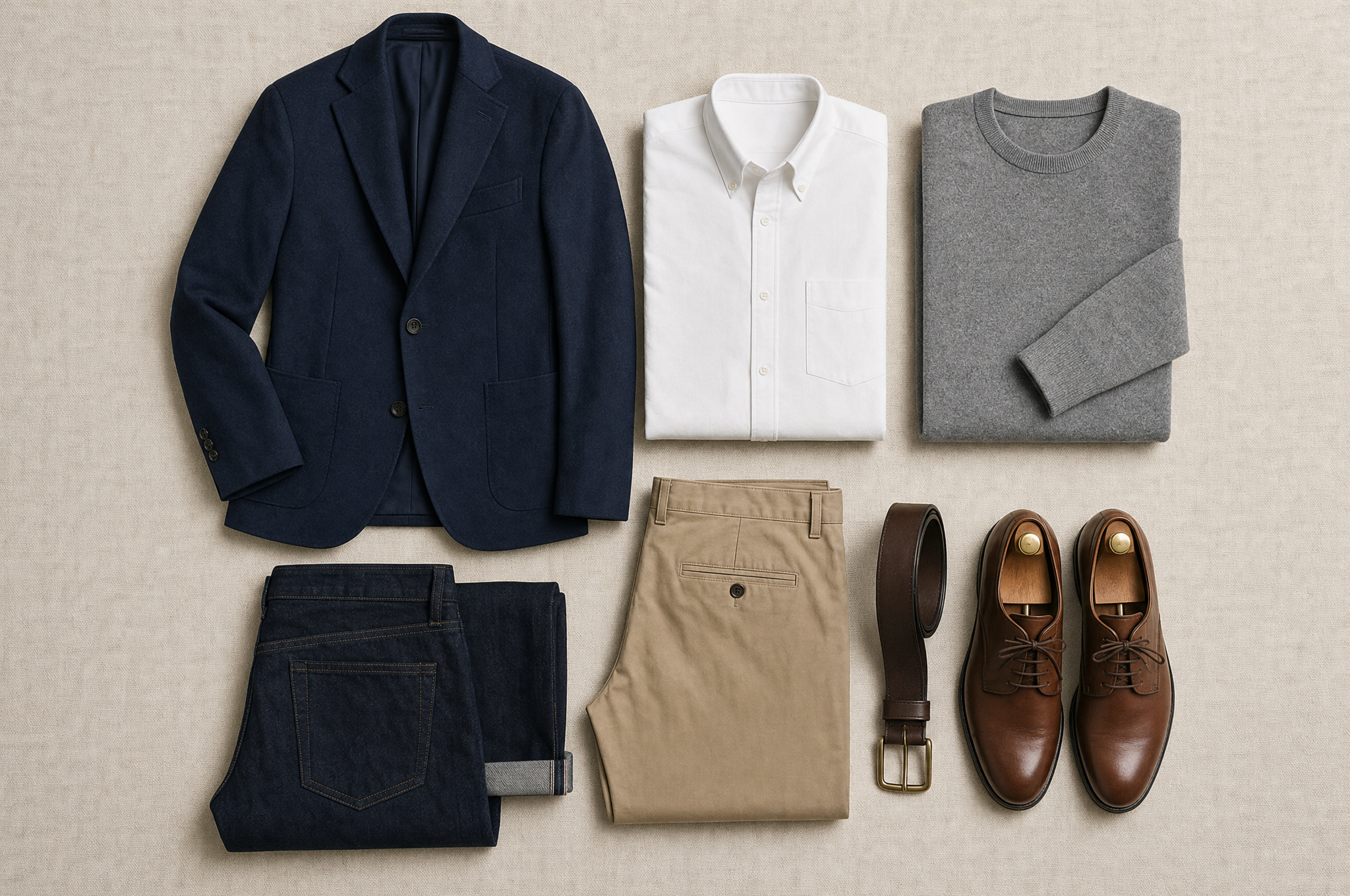
Blazer fabric is smoother and more solid than sport coat fabric, but less fine than suiting. It's substantial enough to stand on its own, without the matching-trouser dependency of a suit jacket. This is what makes it the most versatile tailored jacket in a wardrobe: it pairs with grey wool trousers for business, with dark denim for smart-casual, and with khakis for a classic preppy look.
If you own one tailored jacket, make it a navy blazer. It covers more occasions than any other single piece of tailoring. See where it fits in our capsule wardrobe.
When to wear it: smart-casual and business-casual settings, dinners, events where a suit is too much but a sport coat is too casual. When not to: with matching trousers (buy a suit), or in highly casual settings where any tailoring feels overdressed.
The Sport Coat
The sport coat is the most casual and the most characterful of the three. Its name tells the story: it was originally designed for outdoor pursuits — hunting, shooting, riding — and it retains a ruggedness that the blazer and suit jacket lack.
Sport coat fabric is the giveaway. Where a suit jacket uses smooth worsted and a blazer uses solid navy, a sport coat uses textured, patterned, or heavy fabric: tweed, flannel, herringbone, houndstooth, Donegal, linen. The fabric is the point — a sport coat exists to introduce texture and visual interest that a smoother jacket can't provide.
Construction is typically less structured than a suit jacket. Sport coats often have softer shoulders (less padding), less canvas, and a more relaxed drape. The pockets are often "patch" style (sewn onto the exterior rather than set into the body), which reads as more casual. Elbow patches, though not universal, are a sport coat detail that would never appear on a suit jacket.
| Feature | Suit Jacket | Blazer | Sport Coat |
|---|---|---|---|
| Fabric | Smooth worsted | Solid navy worsted/hopsack | Textured: tweed, flannel, linen |
| Buttons | Matching, horn | Metal (gold/silver) or horn | Horn, leather, contrasting |
| Structure | Fully canvassed, padded | Medium structure | Soft, minimal padding |
| Pockets | Jetted or flap, set in | Flap, set in | Patch or flap, often exterior |
| Formality | Highest | Medium | Lowest |
| Worn with | Matching trousers only | Odd trousers | Odd trousers, denim |
When to wear it: casual and smart-casual settings, autumn and winter (tweed and flannel), or summer (linen). A sport coat with denim or textured trousers is the archetypal "smart but not try-hard" outfit. When not to: in formal business settings where a suit is the expectation, or where the texture would read as too casual.
How to Tell Them Apart in the Store
If you're standing in a store and the tag doesn't specify, here's the quick diagnostic. Feel the fabric: smooth and fine means suit jacket. Solid navy, slightly textured, means blazer. Roughly textured or boldly patterned means sport coat. Look at the buttons: metal buttons are a blazer signature. Matching horn buttons on smooth fabric indicate a suit jacket. Contrasting, leather, or rough horn buttons on textured fabric indicate a sport coat.
Look at the pockets. Patch pockets (exterior, sewn on) are sport coat territory. Flap pockets set into the body could be any of the three, but on smooth fabric lean suit, on navy lean blazer, and on textured fabric lean sport coat. Jetted pockets (no flap, just a slit) are the most formal and almost always indicate a suit jacket.
Finally, the fabric weight and GSM. Suit jackets are typically 250–300 GSM. Blazers are similar. Sport coats range from 300 GSM (lightweight linen) to 450+ GSM (heavy tweed). The heavier and more textured, the more likely it's a sport coat.
Which to Buy First
If you're building a wardrobe from scratch, the order is: blazer, then sport coat, then suit. The navy blazer covers the widest range of occasions and pairs with the most trousers. A tweed or textured sport coat adds seasonal range and casual versatility. A suit comes last — you need it for formal occasions, but it's the least flexible of the three.
And if you're deciding between a tailored odd jacket or a new one, remember: the fabric determines the category. You can't turn a suit jacket into a blazer by changing the buttons — the fabric is too smooth and too specific. But a good tailor can adjust the fit, shorten sleeves, and take in the waist of any of the three. Start with the right category, then get the fit right.
Sport coat, blazer, suit jacket. Three garments, three purposes, three levels of formality. Once you can identify them, you'll never confuse them again — and you'll wear the right one for the occasion every time.