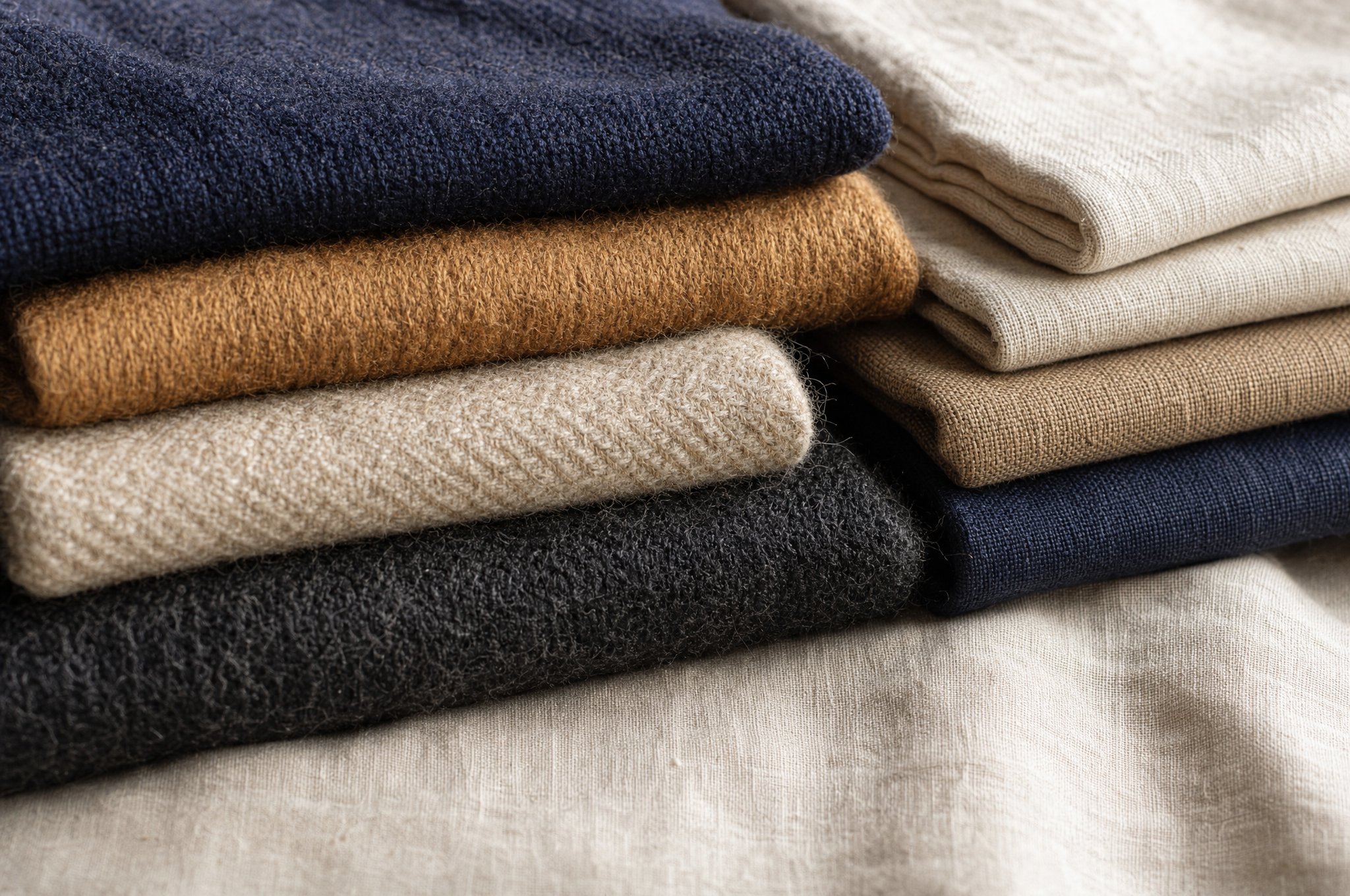
"Wool" is a word that does too much work. It describes the fibre that comes from a sheep — but that fibre, depending on the breed of sheep, the part of the animal it's shorn from, how it's spun, and how it's woven, can become a gossamer summer shirt or a coat that stops a blizzard. Calling both "wool" is like calling both a bicycle and a lorry "transport." Technically accurate. Practically useless.
If you want to choose garments intelligently — to know why one wool suit breathes in July while another swelters, why one sweater itches and another doesn't, why one overcoat lasts decades while another pills into oblivion — you need to understand the distinctions within the wool family. Here is the field guide.
Start With the Fibre: Micron Count
Before we get to types, understand the single number that defines wool quality: the micron. A micron is one-millionth of a metre, and it measures the diameter of an individual wool fibre. The lower the micron count, the finer and softer the wool.
| Microns | Classification | Feel |
|---|---|---|
| Below 16 | Ultrafine | Buttery, almost weightless |
| 16–18.5 | Superfine Merino | Very soft, next-to-skin comfortable |
| 18.5–21 | Fine Merino | Soft, versatile |
| 21–24 | Medium wool | Slight texture, good for outerwear |
| 24–30 | Strong wool | Itchy next to skin, ideal for tweed |
| 30+ | Carpet wool | Coarse, used for rugs and heavy felts |
The micron count explains why a superfine Merino base layer (17 microns) feels like silk against the skin, while a Harris Tweed jacket (often 28+ microns) feels rugged and textured. Same fibre family. Completely different experience.
Merino Wool
Merino sheep produce the finest wool of any breed — typically 18–24 microns, with the best fleeces dipping below 16. This fineness makes Merino the go-to for anything worn next to the skin: base layers, underwear, socks, and fine-gauge sweaters.
Merino's defining trait, beyond softness, is its natural performance. The fibre's crimp (the natural wave in each strand) traps insulating air, while its scales wick moisture away from the skin. A Merino base layer regulates temperature better than nearly any synthetic, doesn't retain odour the way polyester does, and handles repeated wear without washing — a boon for travel.
Merino is the wool you wear against your skin. It's the performance fibre of the wool family — soft, breathable, and almost magically odour-resistant.
When to wear it: as a base layer in cold weather, as a fine-gauge sweater year-round, as a travel shirt (it survives multiple wears between washes). When not to: as outerwear. Fine Merino isn't durable enough for coats or hard-wearing trousers.
Worsted Wool
Worsted isn't a breed — it's a spinning method. Worsted yarn is made from longer wool fibres that are combed (not carded) to align them parallel, then spun tightly. The result is a smooth, firm, lustrous yarn that weaves into a crisp, flat fabric. This is the wool of tailored clothing — suits, trousers, and blazers.
Worsted wool suiting (often labelled by its "Super" number — Super 100s, Super 120s, etc., which refers to the fineness of the yarn, not the thread count) is the backbone of business dress. A mid-weight worsted (around 280 GSM) in navy or charcoal is the most versatile tailored fabric a man can own. It drapes cleanly, resists wrinkling, and wears well over years.
When to wear it: suits for business and formal occasions, dress trousers, year-round blazers. When not to: casual settings where you want texture and softness. Worsted is crisp and architectural — not relaxed.
Flannel Wool
Flannel is worsted or woollen wool that's been brushed to raise a soft nap on the surface. The brushing creates a fuzzy, matte texture that's warmer, softer, and more casual than smooth worsted. Flannel is the fabric of autumn and winter tailoring.
The two flannels you'll encounter are worsted flannel (smoother, more structured, used for suits and trousers) and woollen flannel (looser, softer, used for shirts and heavier trousers). Both share the characteristic brushed surface that reads as "cold weather" the moment you see it.
When to wear it: from late autumn through early spring. Flannel suits and trousers add warmth and visual softness that smooth worsted lacks. Pair with seasonal layering for maximum versatility. When not to: in summer. Flannel traps heat and will swelter in warm weather.
Tweed
Tweed is the heavy, textured, often patterned wool associated with the British Isles — Harris Tweed from Scotland, Donegal from Ireland, Yorkshire tweed from England. It's woven from coarser, stronger wool (often 25+ microns) in dense, hard-wearing weaves. The result is a fabric that's almost indestructible, highly wind-resistant, and visually rich with character.
It's the only wool that improves with age. The coarse fibres felt slightly with wear, making the fabric denser and more wind-resistant over time. A tweed jacket can outlive its owner.
When to wear it: as outerwear and sport coats in cold weather. A tweed jacket over a sweater and flannel trousers is the archetypal winter country outfit, and it works just as well in a city. When not to: in any season that isn't cold. Tweed is heavy, warm, and visually "loud" — it overwhelms in warm weather.
Other Wool Family Members Worth Knowing
Camel hair
Not technically sheep's wool — it's the undercoat of the Bactrian camel — but it's processed and woven like wool. Camel hair is exceptionally soft, warm, and lightweight, with a distinctive golden-brown colour (that's where our brand's camel tone comes from). It's most commonly seen in overcoats and blazers, where its soft drape and warm colour are unmatched.
Pattern weaves: Herringbone, houndstooth, and glen check
These aren't wool types — they're weave patterns that can be executed in any wool. But they're most associated with tweed and flannel. A herringbone tweed sport coat, a houndstooth flannel trouser, or a glen check suiting all draw on the same vocabulary. Understanding the patterns helps you coordinate without clashing.
| Type | Best For | Season | Durability |
|---|---|---|---|
| Superfine Merino | Base layers, fine sweaters | Year-round | Moderate |
| Worsted | Suits, trousers, blazers | Year-round | High |
| Flannel | Suits, trousers, shirts | Autumn–Spring | High |
| Tweed | Sport coats, outerwear | Winter | Very high |
| Camel hair | Overcoats, blazers | Autumn–Winter | Moderate |
Caring for Wool
Regardless of type, wool shares certain care principles. It shouldn't be washed frequently — wool's natural lanolin and crimp manage moisture and odour, and frequent washing strips these properties. Air wool garments between wears, brush them with a soft garment brush to remove surface dirt, and dry-clean only when genuinely soiled or at the start and end of each season.
For knitwear specifically — Merino sweaters, cashmere blends — follow our detailed knitwear care guide. The rules for washing, drying, and storing sweaters are different from those for tailored wool, and getting them wrong is the fastest way to ruin good wool.
Reading a Wool Garment
When you're shopping, you now have the vocabulary to ask the right questions. What micron count is the Merino? Is the suit fabric worsted or woollen? Is that jacket tweed or just a tweed-patterned weave? Is the flannel brushed on both sides or just the face?
Most sales associates won't know the answers — and that itself tells you something. Brands that understand their wool will list the fibre, the weave, the weight, and often the micron count. Brands that don't will say "premium wool" and leave it at that. The former is almost always the better buy.
Wool is the most versatile natural fibre in menswear, but only if you match the type to the job. Merino against the skin, worsted for tailoring, flannel for cold weather, tweed for the deep winter. Get the match right, and wool will serve you for years. Get it wrong, and you'll wonder why your "wool" garment doesn't perform the way you expected.